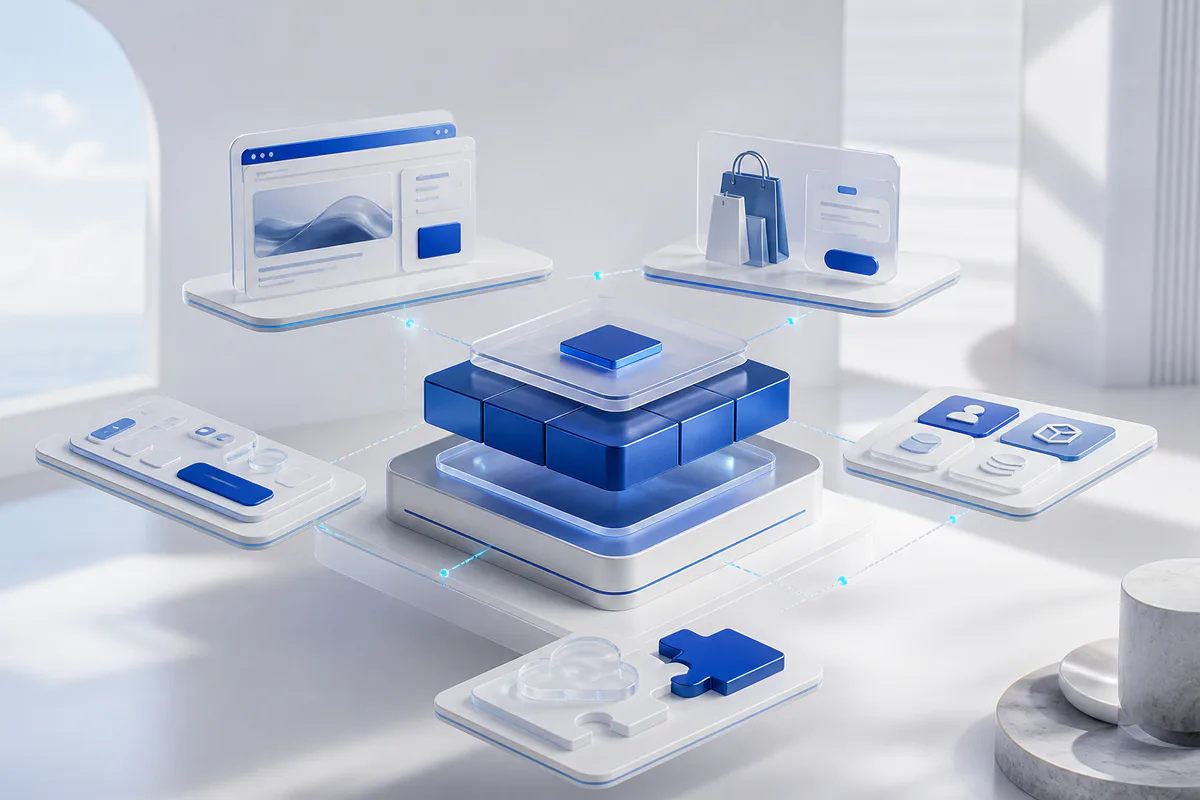

Most growing businesses do not begin with a systems problem. They begin with useful tools chosen to solve immediate needs: a storefront, a CRM, spreadsheets, messaging, accounting software, and a collection of specialist platforms.
The problem appears later. Demand increases, more people become involved, and a customer journey crosses several tools and owners. Information must be copied, status becomes difficult to see, and exceptions depend on the person who remembers how everything works.
The hidden cost is coordination
A disconnected business pays for the same work repeatedly. Teams re-enter information, reconcile reports, chase approvals, and ask one another for status. Customers experience the result as slow response, inconsistent follow-up, or promises that operations cannot reliably fulfill.
This is why buying another tool is rarely a sufficient diagnosis. The first question is where work, data, and ownership stop connecting.
Map the operating journey before selecting technology
Start with one important journey—such as inquiry to confirmed order, lead to qualified opportunity, or service request to completion. Identify the events that move work forward, the decisions people make, the records that must remain accurate, and the owner of each transition.
The resulting map reveals which problems require process clarity, which require integration, which require a better interface, and which should remain human decisions.
A connected system is intentionally smaller
The goal is not to centralize everything for its own sake. A practical operating system uses the fewest dependable components needed to create visibility and control. It gives people a clear next action, preserves a trustworthy record, and measures an outcome the business actually values.
Connection creates leverage when it reduces coordination—not when it adds another layer to maintain.